Curriulum Journey
Early Years Foundations Stage (EYFS)
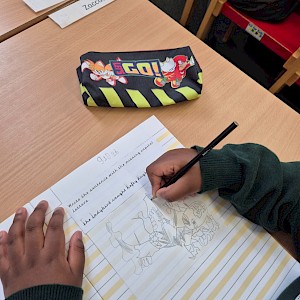
The writing journey begins in the Early Years, where children develop the physical foundations necessary for successful writing through a strong focus on gross and fine motor development. Before formal writing is introduced, children engage in activities that strengthen core stability, hand control and pencil grip. Opportunities for mark making are embedded throughout continuous provision, enabling children to develop confidence and independence as writers.
Writing in Reception is supported by Drawing Club and closely linked to Little Wandle Letters and Sounds Revised. Children are taught correct letter formation alongside daily phonics sessions and begin applying their phonics knowledge to spell words, captions and simple sentences. They learn to hear sounds, segment words and match sounds to graphemes while developing accurate letter formation and pencil control. Tricky words are introduced and practised regularly to support increasing fluency.
Key Stage 1
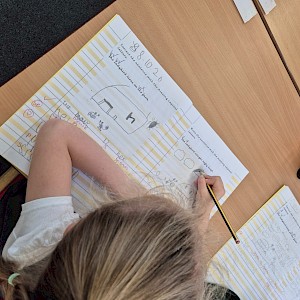
In Year 1, children build upon these foundations through Curious Quests and daily Little Wandle phonics lessons. They continue to develop sentence construction, storytelling skills and vocabulary while applying phonics knowledge to independent writing. Handwriting remains closely linked to the phonics sequence, enabling children to practise graphemes, words and sentences with increasing accuracy, fluency and stamina. Children learn alternative spellings for known sounds and begin making informed spelling choices.
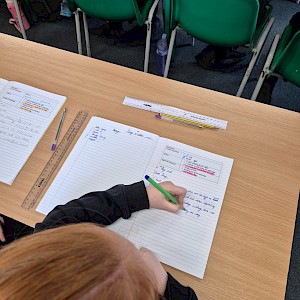
In Year 2, children strengthen their application of spelling and handwriting while developing greater independence as writers. Following secure phonics knowledge, pupils transition through Little Wandle's Bridge to Spelling programme before moving into the spelling programme itself. This supports children in recognising spelling patterns, understanding word construction and developing effective spelling strategies. Handwriting instruction focuses on consistent letter sizing, positioning and increasingly fluent joined handwriting where appropriate.
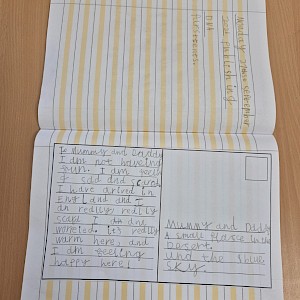
From Year 2 onwards, writing is taught through carefully selected high-quality texts that expose pupils to ambitious vocabulary, varied language structures and a range of genres. Children engage in a structured writing process of immersion, planning, drafting, editing and publishing. This allows them to develop the skills required to write effectively for different audiences and purposes whilst applying spelling, grammar and handwriting knowledge in meaningful contexts.
Key Stage 2
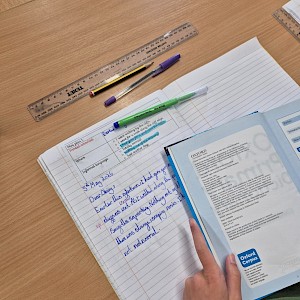
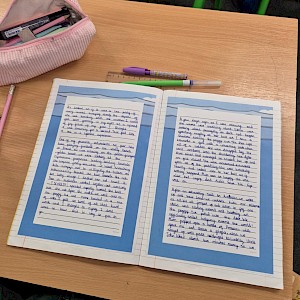
In Key Stage 2, pupils continue to develop their writing through a wide range of fiction, non-fiction and poetry units. Spelling is taught through Spelling Shed, which follows the National Curriculum progression and develops understanding of statutory spelling patterns, morphology, etymology, prefixes, suffixes and word origins. Children investigate spelling patterns and apply new learning in their independent writing. Handwriting is developed through Letter-Join, supporting fluency, consistency, speed and stamina in joined handwriting.
As pupils move through the school, they become increasingly independent writers who can make purposeful choices about vocabulary, grammar, structure and organisation. By the end of Year 6, pupils can write confidently for a wide range of audiences and purposes, applying fluent handwriting and accurate spelling to support the quality and effectiveness of their written communication.