Interested in joining the Gordon Children's Academy in September 2027?

Join us for our Open Morning Tours to see our school in action and meet our staff and children. 
Spaces are limited so please secure your place by booking here.


To help keep all pupils safe, please ensure the school has up-to-date information about any allergies your child may have. Accurate allergy information enables us to put appropriate support plans in place, train staff effectively, and respond quickly in an emergency. We all have a part to play in creating a safe environment, including following our nut-aware policy and being mindful of the food brought into school. If your child has an allergy, please contact the school or update their details via Arbor. Be Allergy Aware and Save A Life - see more here.
Curriculum Intent

The Computing curriculum is designed to equip all pupils with the computational thinking, creativity, and digital literacy required to become active, responsible, and discerning participants in a rapidly evolving digital world. We intend to foster curious, resilient learners who not only know how to use technology, but understand the fundamental principles of how digital systems work, how software is engineered, and how digital media impacts society. We follow a broad and balanced Computing curriculum, based on the highly recommended Teach Computing scheme, that builds on previous learning and provides both support and challenge for learners.


Our curriculum ensures a progression of skills and covers all aspects of the Computing national curriculum. All classes will have a scheduled Computing lesson each week. Children’s work will be stored on our school system via OneNote using their own logins for reference and assessment, getting children used to using the Microsoft suite of apps, which is of particular importance for our 1:1 device scheme in Upper Key Stage 2. The Computing curriculum will contribute to children’s personal development in creativity, independence, judgement, and self-reflection, demonstrated through their ability to talk confidently about their work and share it with others. Progress will be shown through outcomes and through the important record of the process leading to them, ensuring Computing is embedded across our whole school curriculum and opportunities to enhance learning using technology are always taken.

Curriculum Journey

By the end of Key Stage 1, children will:

  • Establish foundational mental models of digital devices, basic algorithmic design, and digital safety.
  • Explore technology in the world around us, identifying hardware components (screens, mice, keyboards, touchscreens), and understanding how information is saved and retrieved.
  • Use Bee-Bots and directional algorithms to understand instructions, sequences, and simple debugging.
  • Know how to use ScratchJr to create simple sequential animations and event-driven commands.
  • Produce digital painting and writing; collecting and categorising data using simple digital grouping tools and pictograms.

By the end of Key Stage 2, children will:

  • Computer Systems & Networks: Progress from identifying basic input-process-output hardware to deconstructing how the internet operates through packet switching, IP routing, search engine indexing, and collaborative network infrastructure.
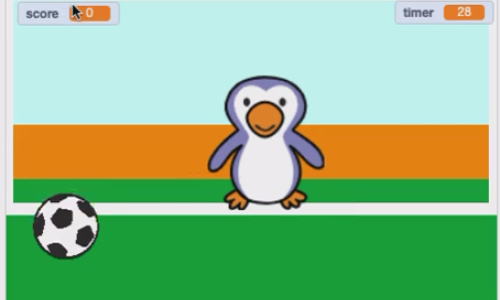
  • Programming & Computational Logic: Systematically master core control structures—including repetition, conditional selection, and variable state management—within block-based languages and physical computing microcontrollers (such as BBC micro:bits).
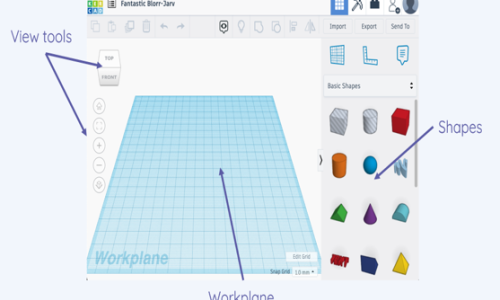
  • Creating Media: Manipulate purposeful digital media with increasing technical precision across audio production, photo editing, vector graphics, multi-track video editing, and 3D design.
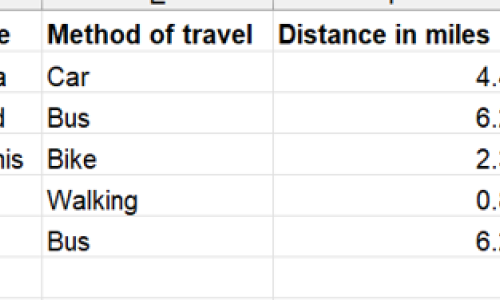
  • Data & Information: Transition from interrogating branching databases to structuring, filtering, and analysing complex flat-file databases and spreadsheets using mathematical formulas and visual charts.

Curriculum in Practice

Substantive Threads

Our curriculum follows a spiral model built on four substantive threads, Computing Systems and Networks, Creating Media, Data and Information, and Programming, consistently revisited across every year group from Year 1 to Year 6.

Each year follows a coherent, structured sequence:

  • exploring systems and networks in Autumn 1,
  • advancing digital content creation across Autumn 2 and Summer 1,
  • handling data and information in Spring 2,
  • and mastering computational logic across two dedicated programming units in Spring 1 and Summer 2.

This systematic revisiting reinforces prior knowledge and deepens complexity year-on-year, progressing from foundational floor robots and simple grouping to advanced variables, physical computing, and spreadsheet modelling.